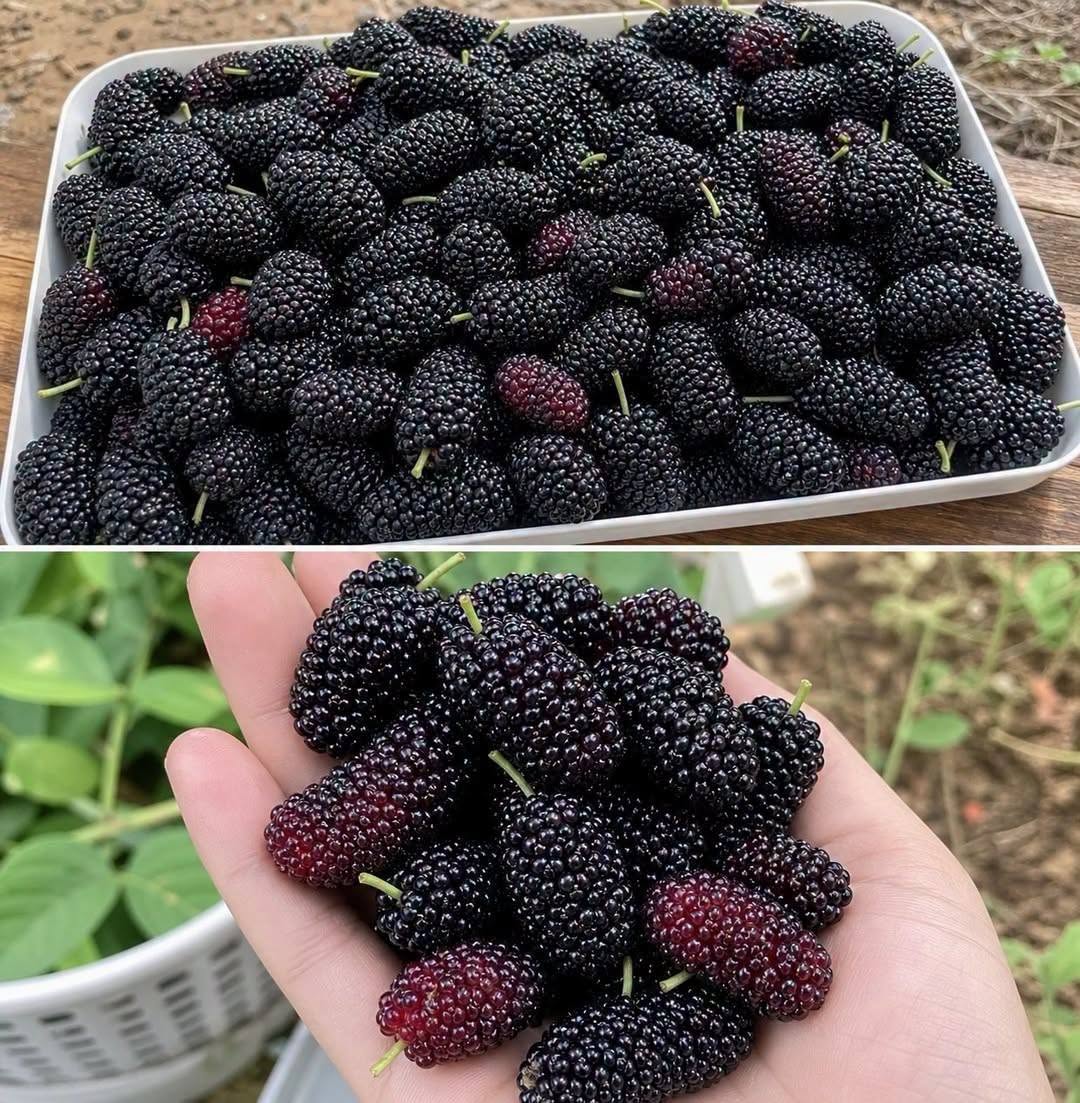
At first glance, the berries in this image might look like blackberries. But if you look closely, you’ll notice something distinctive: their elongated shape, the clusters of small, rounded segments, and the small green stems attached to many of them.
These are blackberries , a fruit that has been enjoyed for centuries in different parts of the world. Depending on the variety and ripeness, blackberries can range from deep red and purple to almost black.
Its striking dark color isn’t just pretty. It comes from natural plant pigments, including anthocyanins , which are also found in foods like blueberries, blackberries, and purple grapes.
But what makes blackberries particularly interesting is the combination of flavor, nutrients, fiber, and concentrated plant compounds in such a small fruit.
What are blackberries?
Blackberries are the fruit of trees belonging to the genus Morus . Several species are commonly cultivated, including black, red, and white blackberries.
When unripe, the fruit is usually lighter in color and firmer. As it ripens, it becomes softer and takes on deeper shades of red, purple, or black.
Fully ripe blackberries are usually:
- Sweet and slightly acidic
- Soft and juicy
- Rich in natural sugars
- Deep purple or almost black.
- Slightly elongated instead of perfectly round.
An interesting feature is that what appears to be a single berry is actually a composite fruit made up of many small fruit segments .
That’s why the surface has that characteristic irregular appearance that can be seen in the photograph.