The doctor may be reckless.
The use of whole fruit and traditional foods is different from that of highly concentrated extracts.
Are blackberries safe for everyone?
For most people, ripe blackberries can be part of a normal, balanced diet.
But there are some things worth remembering.
People with fruit allergies
Although rare, allergic reactions to food can occur.
Anyone experiencing symptoms such as:
- Itching or tingling in the mouth
- Urticaria
- Swelling
- Difficulty breathing
- vomiting
After eating something, you should stop eating and seek medical attention. Difficulty breathing or significant swelling could be an emergency.
People who control their blood sugar level
Blackberries contain naturally occurring carbohydrates and sugars.
That doesn’t make them an unhealthy food, but people with diabetes or other reasons to closely monitor blood glucose should consider fruit as part of their total carbohydrate intake.
Whole fruit is, in general, very different from sugary fruit drinks or desserts made with large amounts of added sugar.
People with sensitive digestion
Because blackberries contain fiber, eating a very large amount at once can cause bloating, gas, or digestive discomfort in some people.
Starting with a modest portion is a sensible strategy.
Don’t confuse blackberries with brambleberries.
Fruits can look surprisingly similar, especially in photographs.
However, there are some useful differences.
Blackberries:
- Generally longer
- They often have a small stem attached.
- They grow on trees
- It consists of many small, rounded segments.
- It can become extremely dark when it is ripe.
Blackberries:
- Generally more rounded or more conical.
- They grow on thorny or thornless brambles.
- They often have a different internal structure.
- They are usually collected from shrubs or creeping plants.
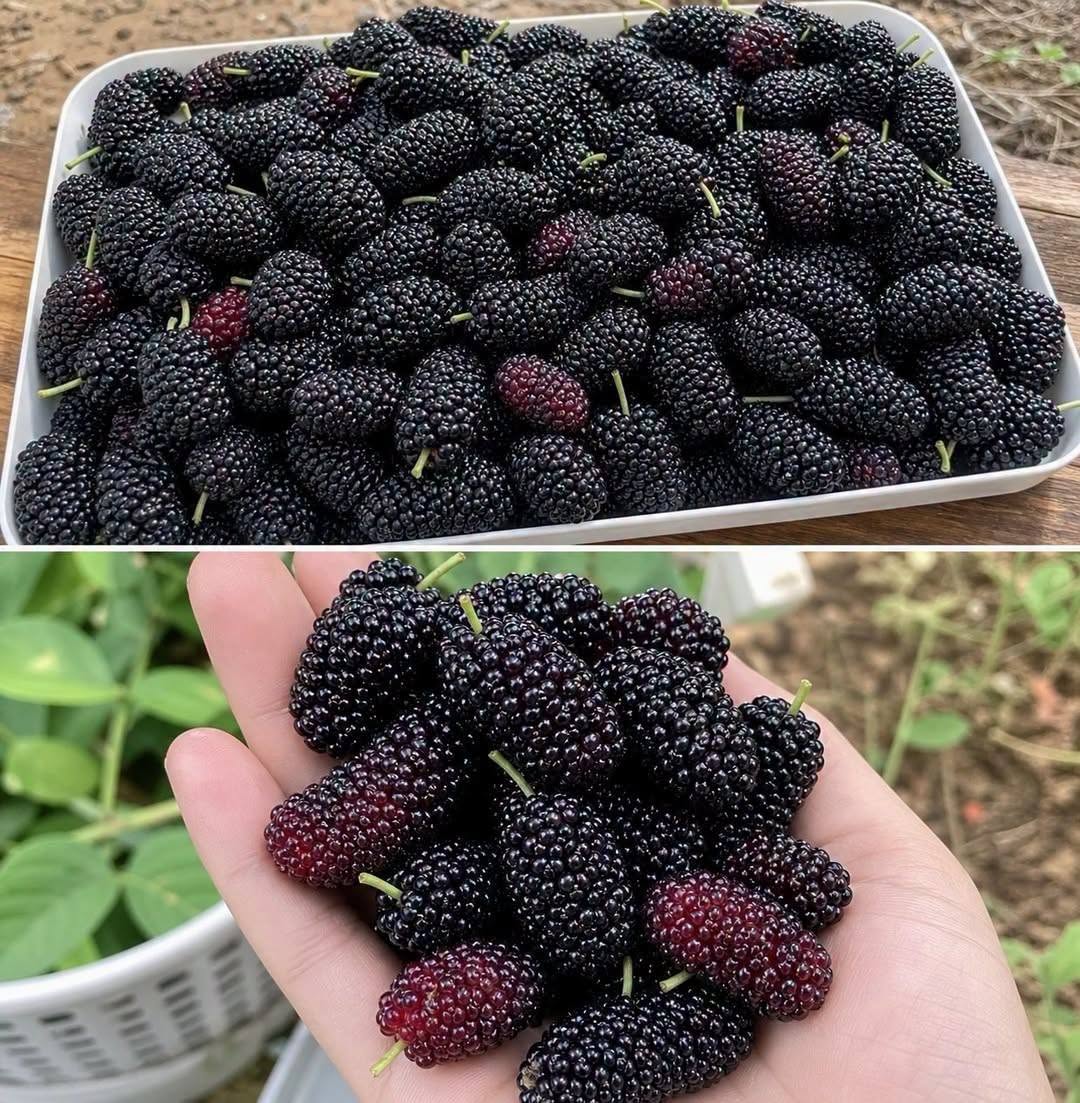
The photograph shows characteristics that fully match those of blackberries , particularly the elongated shape and visible stems.
How to tell when a blackberry is ripe
Color alone is not always enough.
A ripe blackberry is generally:
- Intense color
- Soft to the touch
- Juicy
- Easy to separate from the plant
- Sweet instead of very sour.
An interesting characteristic of ripe blackberries is that they can become extremely soft.
That is also why they are difficult to transport and store compared to firmer fruits.
If you grow blackberries at home, you may need to harvest the ripe fruit frequently, as birds and other animals are also often attracted to them.
How to keep blackberries fresh
Fresh blackberries are delicate.
If you have picked them or bought them, avoid crushing them under heavy food containers.
A practical approach consists of:
- Remove any damaged or moldy berries.
- Keep them refrigerated.
- Avoid washing them until you are about to eat them.
- Rinse gently with cold running water before consuming.
- Consume them relatively quickly because they don’t usually stay fresh for very long.
If you have a bountiful harvest, freezing is another option.
Spread the clean, dry berries in a single layer on a tray and freeze them before transferring them to a freezer-safe container or bag. This prevents them from freezing into a solid mass.
What can you prepare with blackberries?
Fresh blackberries are surprisingly versatile.
bowl of blackberry yogurt
Combine:
- Fresh blackberries
- natural yogurt
- Balls
- Chia or flax seeds
- A small amount of cinnamon
Blackberry smoothie
Mix:
- Blackberries
- Banana
- natural yogurt or milk
- Ice
- Nuts or seeds (optional)
blackberry salad
Combine blackberries with other seasonal fruits for a colorful snack.
Homemade blackberry sauce
Simmer ripe blackberries with a little water and lemon juice. The resulting mixture can be used as a topping for yogurt, pancakes, or whole-grain desserts.
Frozen blackberry snack
Freeze ripe berries and eat them slightly thawed for a naturally sweet cold snack.
One important point: don’t turn a healthy fruit into a “miracle cure”.
Social media often turns nutritious foods into exaggerated health claims.
You may see claims that suggest blackberries can:
- “Cleanse the liver”
- “Detoxifying the kidneys”
- “Cure diabetes”
- “Eliminate abdominal fat”
- “Preventing cancer”
- “Reversing aging”
Those claims go far beyond what the evidence supports.
Blackberries are a nutritious fruit , not a medicine.
Its fiber, vitamins, minerals and plant compounds can contribute to a healthy diet, but no fruit alone can replace medical treatment, a balanced diet, physical activity, adequate sleep or appropriate preventive care.
The healthiest way to approach the problem is to appreciate blackberries for what they actually offer, rather than expecting them to perform miracles.
Why this fruit deserves more attention
Blackberries have a special appeal.
They don’t have the same marketing power as blueberries or strawberries. Furthermore, they tend to be much less familiar to those who didn’t grow up near mulberry trees.
However, they offer many of the qualities that people look for in a nutritious fruit:
They are naturally sweet.
They have a vibrant color.
They contain fiber.
They provide vitamins and minerals.
They contain various plant compounds.
And they can be eaten fresh with almost no preparation.
The image above also shows something increasingly rare in modern diets: a fruit that looks almost exactly like what it is.
No complicated packaging. No long ingredient lists. No artificial flavorings.
Freshly ripened fruit, picked directly from the tree.