

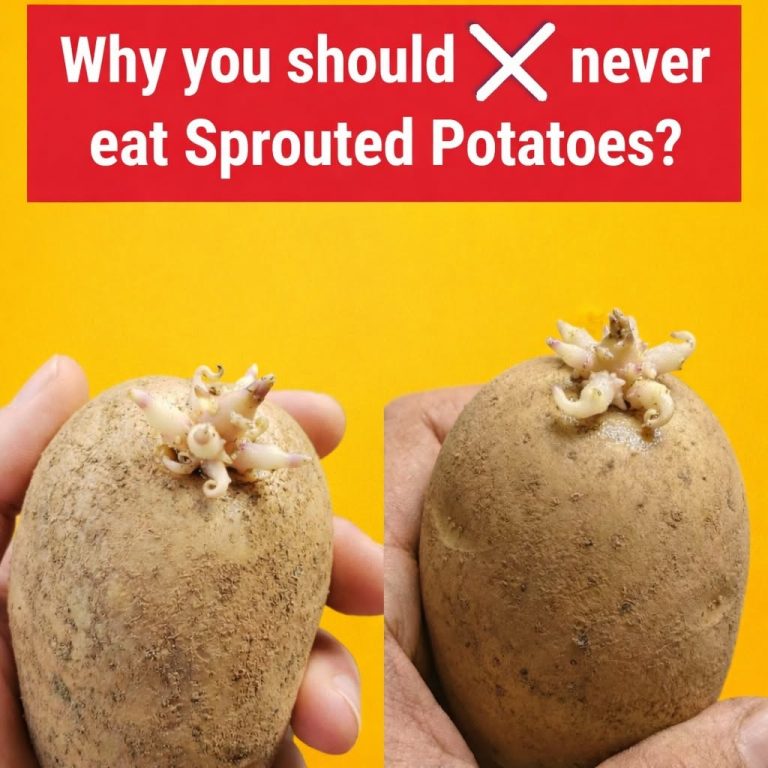
Potatoes sprout when they’ve been stored too long or kept in conditions that encourage growth—especially warmth, light, or humidity. As they start developing shoots, they can also produce higher levels of natural compounds called glycoalkaloids, including solanine and chaconine. These compounds are part of the potato’s built-in defense system, but too much can cause stomach discomfort for some people. One of the biggest warning signs is green coloring on the skin, which often appears when potatoes are exposed to light. Sprouts and green patches don’t automatically mean the potato is unsafe, but they do mean it’s time to inspect it carefully before cooking.
The good news is that mildly sprouted potatoes can still be usable in many cases. If the potato is firm, doesn’t smell odd, and only has small sprouts, you can remove the sprouts, peel the potato, and cut away any green areas or damaged spots. A quick texture test matters too—if the potato feels soft, shriveled, or unusually lightweight, it’s usually past its best. And if there’s deep green coloring, heavy sprouting, or a bitter smell, it’s safer to throw it away. When it comes to food safety, trusting your senses and choosing caution is always a smart move.
Continued on next page:
To see the full cooking instructions, go to the next page or click the Open button (>) and don't forget to SHARE it with your friends on Facebook.